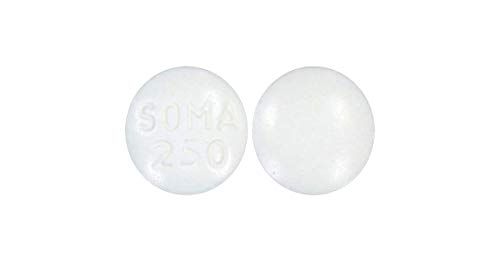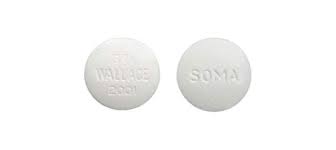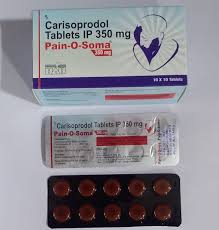
Common side effects include headache, dizziness, and sleepiness.[7] Serious side effect may include addiction, allergic reactions, and seizures.[7] In people with a sulfa allergy certain formulations may result in problems.[7] Safety during pregnancy and breastfeeding is not clear.[7][8] How it works is not clear.[7] Some of its effects are believed to occur following metabolic conversion into meprobamate, carisoprodol’s main active metabolite.[7]
Carisoprodol was approved for medical use in the United States in 1959.[7] Its approval in the European Union was withdrawn in 2008.[9] It is available as a generic medication.[7] In 2019, it was the 343rd most commonly prescribed medication in the United States, with more than 800,000 prescriptions.[10] In the United States, it is a Schedule IV controlled substance.
Medical uses
Carisoprodol is meant to be used along with rest, physical therapy and other measures to relax muscles after strains, sprains and muscle injuries.[11] It comes in tablet format and is taken by the mouth three times a day and before bed.[11]
Side effects
The usual dose of 350 mg is unlikely to engender prominent side effects other than somnolence, and mild to significant euphoria or dysphoria, but the euphoria is generally short-lived due to the fast metabolism of carisoprodol into meprobamate and other metabolites; the euphoria derived is, according to new research,[12] most likely due to carisoprodol’s inherent, potent anxiolytic effects that are far stronger than those produced by its primary metabolite, meprobamate, which is often misblamed for the drug-seeking associated with carisoprodol, as carisoprodol itself is responsible for the significantly more intense central nervous system effects than meprobamate alone. Carisoprodol has a qualitatively different set of effects to that of meprobamate (Miltown). The medication is well tolerated and without adverse effects in the majority of patients for whom it is indicated. In some patients, however, and/or early in therapy, carisoprodol can have the full spectrum of sedative side effects and can impair the patient’s ability to operate a firearm, motor vehicles, and other machinery of various types, especially when taken with medications containing alcohol, in which case an alternative medication would be considered. The intensity of the side effects of carisoprodol tends to lessen as therapy continues, as is the case with many other drugs. Other side effects include: dizziness, clumsiness, headache, fast heart rate, upset stomach, vomiting and skin rash.[11]
There are 368 drugs known to interact with carisoprodol including 28 major drug interactions.[13] The interaction of carisoprodol with essentially all opioids, and other centrally acting analgesics, but especially codeine, those of the codeine-derived subgroup of the semisynthetic class (ethylmorphine, dihydrocodeine, hydrocodone, oxycodone, nicocodeine, benzylmorphine, the various acetylated codeine derivatives including acetyldihydrocodeine, dihydroisocodeine, nicodicodeine and others) which allows the use of a smaller dose of the opioid to have a given effect, is useful in general and especially where skeletal muscle injury and/or spasm is a large part of the problem. The potentiation effect is also useful in other pain situations and is also especially useful with opioids of the open-chain class, such as methadone, levomethadone, ketobemidone, phenadoxone and others. In recreational drug users, deaths have resulted from combining doses of hydrocodone and carisoprodol. Another danger of misuse of carisoprodol and opiates is the potential to asphyxiate while unconscious.[citation needed]
Meprobamate and other muscle-relaxing drugs often were subjects of misuse in the 1950s and 60s.[14][15] Overdose cases were reported as early as 1957, and have been reported on several occasions since then.[16][17][18][19][20][21][22]
Carisoprodol is metabolized by the liver and excreted by the kidneys, so this drug must be used with caution with patients that have impaired hepatic or renal function.[23] Because of potential for more severe side effects, this drug is on the list to avoid for elderly people.[24]
Withdrawal
Carisoprodol, meprobamate, and related drugs such as tybamate, have the potential to produce physical dependence of the barbiturate type following periods of prolonged use. Withdrawal of the drug after extensive use may require hospitalization in medically compromised patients. In severe cases the withdrawal can mimic the symptoms of alcohol withdrawal including the potentially lethal status epilepticus.
Psychological dependence has also been linked to carisoprodol use[25] although this is much less severe than with meprobamate itself (presumably due to the slower onset of effects). Psychological dependence is more common in those who use carisoprodol non-medically and those who have a history of substance use (particularly sedatives or alcohol). It may reach clinical significance before physiological tolerance and dependence have occurred and (as with benzodiazepines) has been demonstrated to persist to varying degrees of severity for months or years after discontinuation.
Discontinuation of carisoprodol, as with all GABA-ergics, can result in cognitive changes which persist for weeks, months, or rarely even years including greatly increased anxiety and depression, social withdrawal, hair-trigger agitation/aggression, chronic insomnia, new or aggravated (often illogical) phobias, reduced IQ, short term and long-term memory loss, and dozens of other sequelae.[26] The effects, severity, and duration appear to be slightly dose-dependent but are mainly determined by the patient’s pattern of use (taken as prescribed, taken in bulk doses, mixed with other drugs, a combination of the above, etc.), genetic predisposition to substance use, and a history of substance use all increase the patients risk of persistent discontinuation syndrome symptoms.
Treatment for physical withdrawal generally involves switching the patient to a long-acting benzodiazepine such as diazepam or clonazepam then slowly titrating them off the replacement drug completely at a rate which is both reasonably comfortable for the patient but rapid enough for the managing physician to consider the rate of progress acceptable (overly rapid dose reduction greatly increases the risk of patient non-compliance such as the use of illicitly obtained alternative sedatives and/or alcohol). Psychotherapy and cognitive behavioral therapy have demonstrated moderate success in reducing the rebound anxiety which results upon carisoprodol discontinuation but only when combined with regular and active attendance to a substance use support group.[27]
Carisoprodol withdrawal can be life-threatening (especially in high dose users and those who attempt to quit “cold turkey“). Medical supervision is recommended, with gradual reduction of dose of carisoprodol or a substituted medication, typical of other depressant drugs.
Non-medical use
Combining a muscle relaxant like carisoprodol with opioids and benzodiazepines is referred to as “The Holy Trinity” as it has been reported to increase the power of the “high”.[28]
Recreational users of carisoprodol usually seek its potentially heavy sedating, relaxant, and anxiolytic effects.[29] Because of its potentiating effects on narcotics, it is often used in conjunction with many opioid drugs. Carisoprodol is not tested for on standard drug testing screens, although tests for it do exist.
On 26 March 2010 the DEA issued a Notice of Hearing on a proposal for the placement of carisoprodol in schedule IV of the Controlled Substances Act, later confirming its classification under schedule IV.[30][31]